You have about 5 seconds to convince someone your content is worth their time. IF they stay, research shows they’ll spend an average of 26 seconds actually reading it.
The reality is that we need to communicate in a way that is short, straightforward, and easy to scan if we want to capture the attention of an audience that is busy, seeking value, and easily distracted.
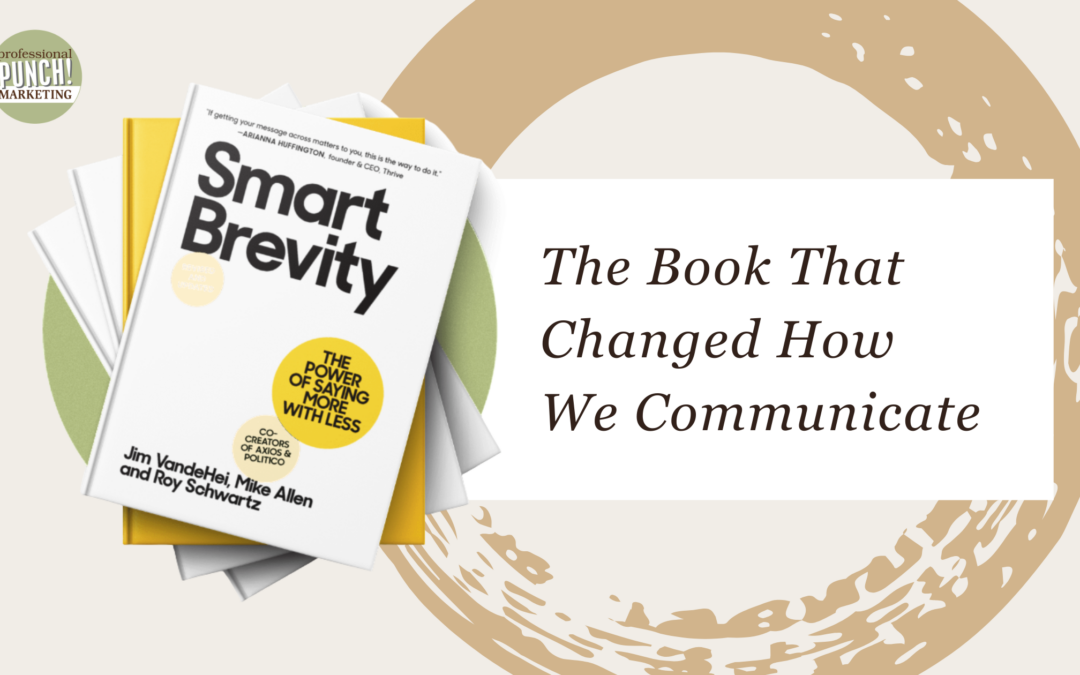
Smart Brevity is the book that has helped the ProPunch team achieve that.
It made us rethink how we write, how we communicate, and ultimately, how we create impactful marketing for our clients.
If you run a business, write a newsletter, post on LinkedIn, regularly talk with clients, give presentations, or send emails… this one’s for you.
In this article, we’ll cover:
- Why brevity is necessary
- What is the Smart Brevity framework
- What the ProPunch team loves about Smart Brevity
- How you can apply Smart Brevity today

The Problem
Approximately 402.74 million terabytes of internet content are created every day. Most of it is just content for content’s sake and not worth a person’s time.
Eye-tracking research cited in Smart Brevity shows that the average person spends just 26 seconds reading a piece of content.
We scan.
We skim.
We scroll.
We move on to the next thing competing for our attention.
It’s not that people are less curious or less interested. It’s that people are BUSY and already drowning in content. They know what they need, and if you don’t deliver it quickly and concisely, you’ve lost them.
AI is making the situation worse.
LLMs like ChatGPT can generate a 1,000-word blog post in seconds. But the content is generic, bloated, and not written with the audience in mind.
The internet is filling up fast with forgettable content.
The solution is to create intentional content written for a real person, with a clear point, and the confidence to say it in fewer words.
That’s the premise of Smart Brevity, and it’s why our team keeps coming back to it.
What Is Smart Brevity?
Smart Brevity is a communication framework built on one principle: say more with less.
It was written by Jim VandeHei, Mike Allen, and Roy Schwartz — the co-founders of Axios and, before that, Politico. Two of the most-read news organizations in the country. They studied reader behavior, and the data showed that even their most engaged, highest-paying readers preferred short and punchy over long and comprehensive.
Their conclusion: “Brevity is confidence. Length is fear.”
Now, some of our team members admittedly scoffed at that the first time we read it.
The nuance matters here. It’s not about writing short for short’s sake, dumbing things down, or stripping out substance.
The goal is “short, not shallow.”
Smart Brevity gives you a repeatable framework for doing that.
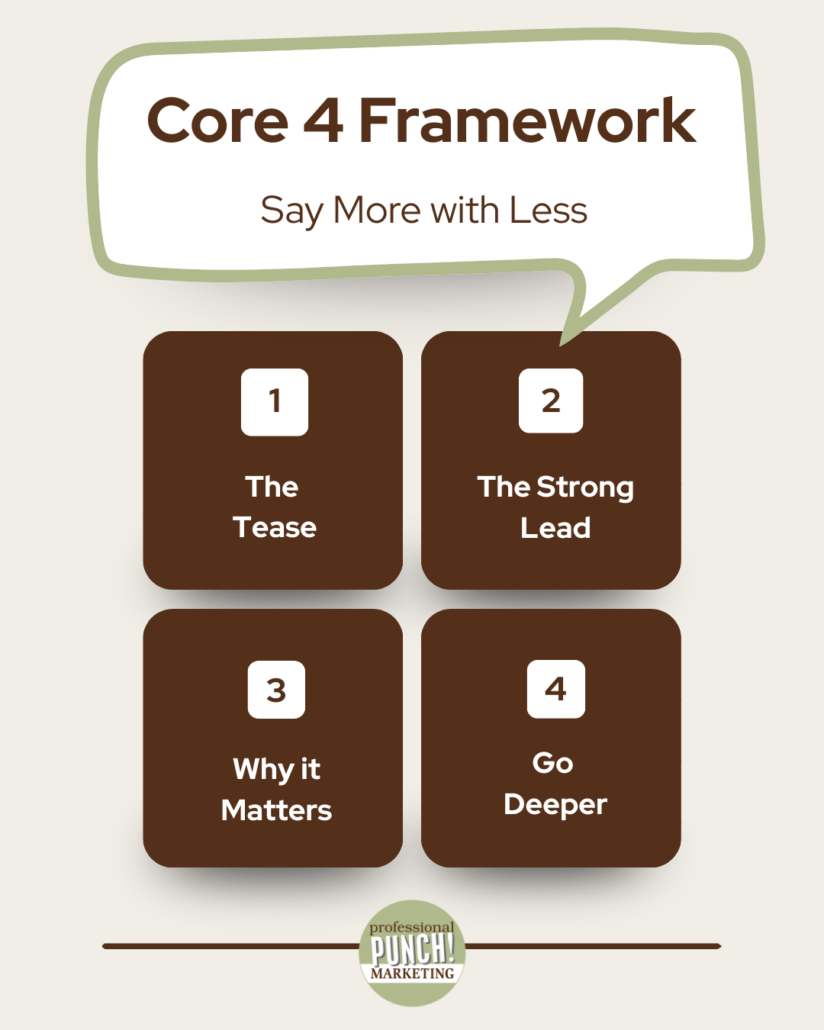
The Smart Brevity Framework: The Core 4
Every piece of communication can be structured around four elements:
- The Tease: 6 words or fewer. Grab attention before they scroll, click away, or stop reading.
- The Strong Lede (or lead): One sharp sentence. Tell them something worth knowing, right away.
- Why It Matters: Don’t assume they know the “so what.” Give them a reason to keep reading.
- Go Deeper: Give them an option to learn more, but make sure it’s worth their time.
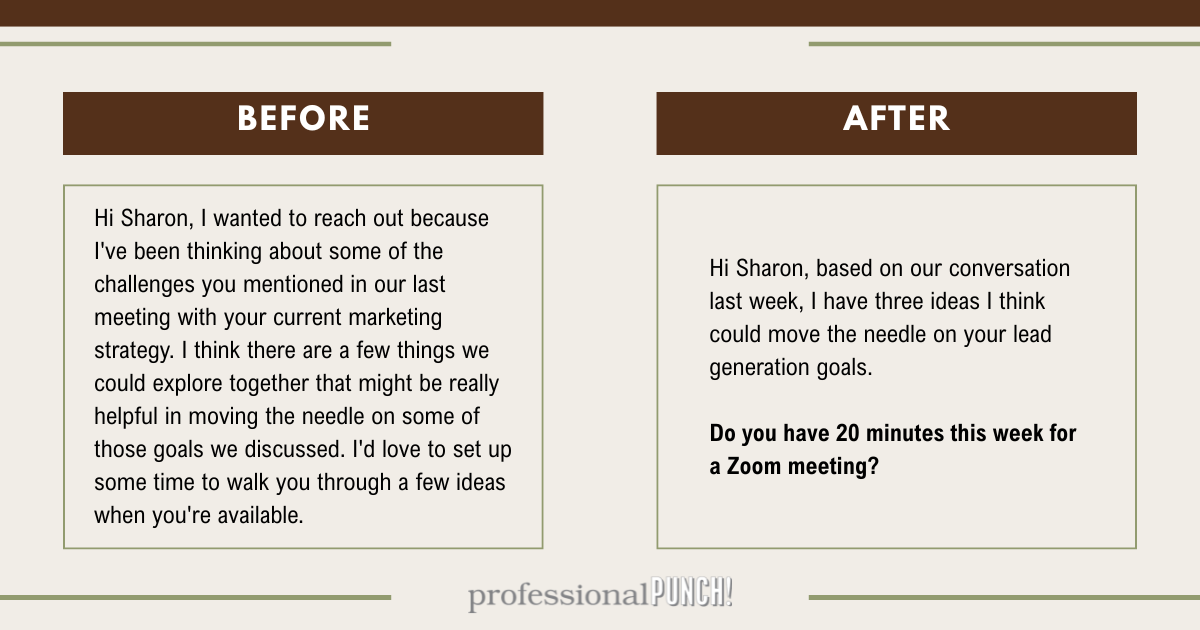
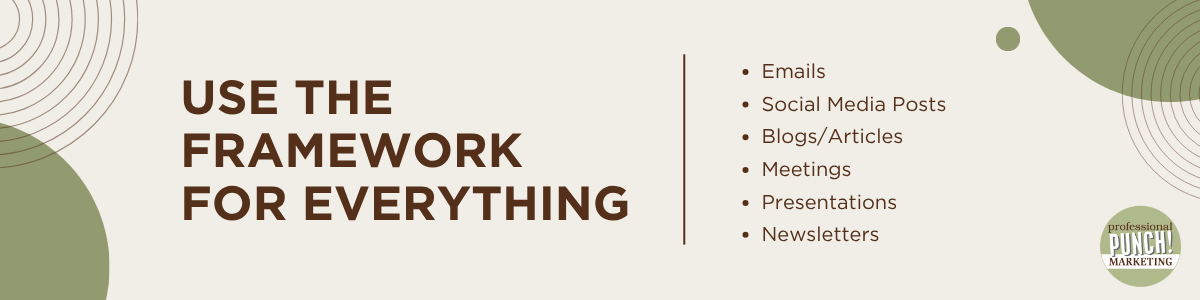
Simple. Repeatable. And it works for everything: a LinkedIn post, a client email, a presentation, a newsletter…anything.
Go Deeper: Get your own copy of Smart Brevity. It is a short, sharp read, with a ton of tips and examples, and it delivers a framework you’ll use every day.
Example of Smart Brevity in Practice
ProPunch Takeaways
The Smart Brevity principles resonate because they reinforce what good marketing already demands.
Here’s what stuck with us most.
The Audience First Principle
Before you write a single word, know exactly who you’re writing for and what they need to hear.
“Marketers talk a lot about ‘target audiences’ and ‘ideal customer profiles’. But Smart Brevity surfaces a truth most of us recognize but rarely admit: ‘we tend to get wrapped up in what we want to say instead of what others need to hear.’
Imagine a specific person within your target audience and write for them.”
The ONE Thing Principle
Great content makes one point clearly. If your reader can’t explain what it was about in a single sentence, it wasn’t focused enough.
“As writers, we often include too much because we’re close to the subject, but readers don’t engage with the same level of intensity.” The concept that stood out to me is the idea that you should ‘learn to identify and trumpet ONE thing you want people to know’ and focus on that.”
Short, Not Shallow
Communicate more value in less time.
“As a ‘wordy’ person, writing less seemed lazy at first. Smart Brevity challenged that instinct, especially the CIA brief example.”
CIA analysts communicate life-or-death intelligence to the most powerful people in the world with ruthless brevity. Their readers’ time and attention are too valuable to waste.
Most busy B2B founders, decision-makers, and executives will thank you for it, too.
NOT a Rulebook
Smart Brevity is a framework, not a rulebook.
The authors compare Smart Brevity to “music theory.” It gives you structure and logic, but it leaves room for jazz.
We don’t agree with every idea in the book.
- The book advocates for always using the simpler word. But sometimes a more precise word is the right one, regardless of syllable count.
- It also suggests that being wordy or formal is inauthentic. We’d push back on that. Some brands are more formal, and some people are naturally verbose, and that is their authenticity.
What matters is that your communication is clear and resonates with your audience.
Regardless, we agree with the underlying principles and believe Smart Brevity offers an excellent framework to communicate more effectively.
How to Use Smart Brevity
Whether you’re writing a LinkedIn post, sending a client email, or building out your content strategy, Smart Brevity is your filter. Before you hit send or publish, ask:
- What is the ONE thing I want this person to remember?
- Did I lead with it or did I bury it?
- Did I tell them why it matters?
- Did I give them a reason to keep reading?
- Did I provide an option to go deeper?
Tips You Can Apply Immediately
LinkedIn posts:
- Your hook is everything. You have two lines before the “see more” cutoff. Lead with the point, not the preamble.
- Use emojis strategically to draw attention to important points.
Blogs/Articles:
- Put your audience first and focus on what they should/want to know about the topic.
- Make your one point clear from the start.
- Formatting matters! Keep paragraphs short, write clear headings, use bullet points and numbered lists, and make sure there is enough white space.
Newsletters:
- Lead with the “one big thing.”
- Limit the newsletter to 5(ish) items, keep them brief, and give the reader the option to “go deeper.”
- Include something that adds authenticity and shows your brand’s personality (team pictures, videos, upcoming events, behind the scenes, day-in-the-life, etc.).
Content strategy:
- Every piece of content needs a clear ONE Thing. If you can’t name it, your reader won’t find it.
- Every piece of content should matter. Make it clear “why it matters” for both your brand and your audience.
At a time when brands are publishing content for content’s sake, and AI can generate content for anyone in seconds, clarity and intentionality are differentiators.
That’s why we use Smart Brevity as a strategic advantage.
The Bottom Line
Smart marketing and Smart Brevity have similar objectives:
Cut through the noise.
Say what matters.
Create content that earns your audience’s attention.
That’s the lens our team brings to every piece of content we help clients create. If that sounds like something your marketing could use more of, we’d love to talk.
P.S. The same team behind Smart Brevity recently announced their new book: Simplify: Do 50% More with 50% Less. Our team is looking forward to cracking that one open.