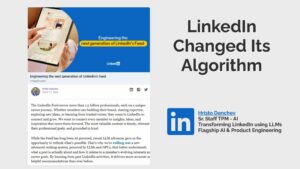
LinkedIn essentially rebuilt its algorithm from the ground up.
The old ranking system has been replaced by a pair of AI models that read your content, your history, and your audience in a fundamentally different way.
If your LinkedIn reach has felt inconsistent or unpredictable lately, you’re not imagining it.
Here’s what changed, what it means for solopreneurs and small business owners, and what adjustments worth making right now.
What LinkedIn Actually Changed
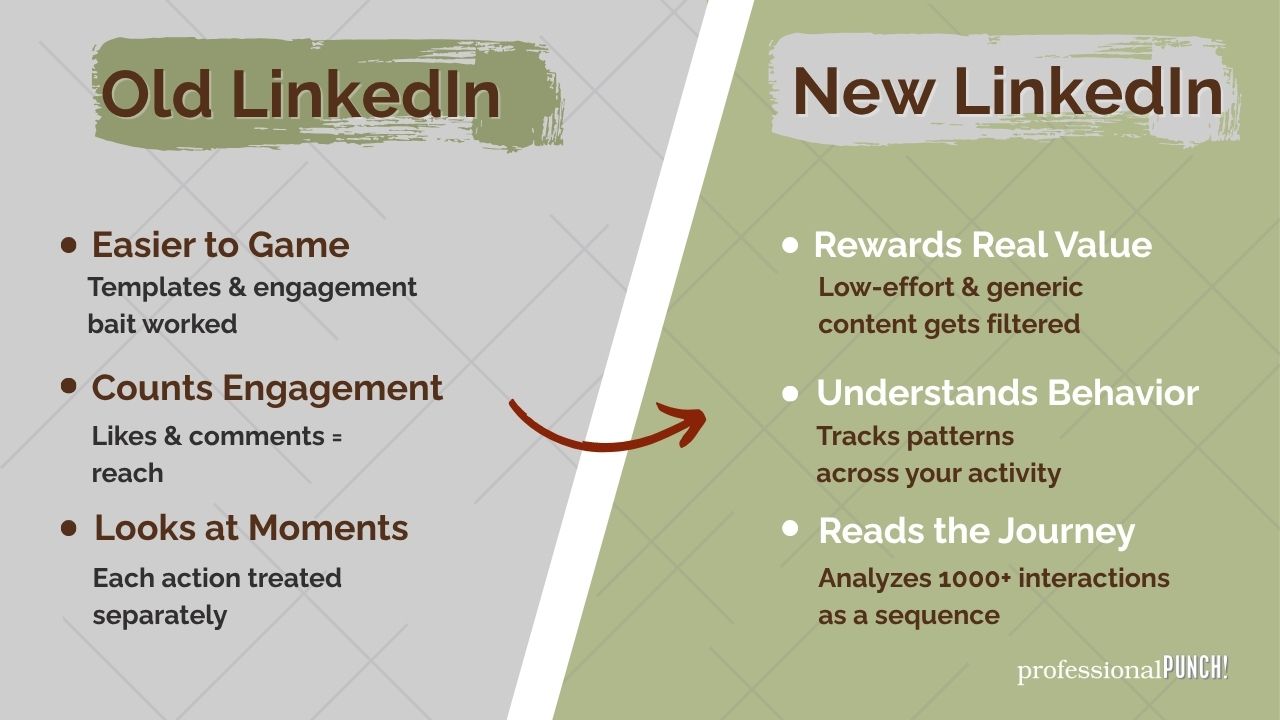
The old LinkedIn feed worked by analyzing isolated signals, such as likes and comments, to predict what you’d want to see next.
The new system replaced that fragmented ranking pipeline with two AI components:
- A large language model (LLM) for content retrieval.
- A generative recommendation model called 360Brew.
The Key Difference
The feed is no longer a popularity contest based on recent activity.
It’s a relevance engine building a picture of who you are professionally, what you care about, and what you’re likely to find valuable.
360Brew doesn’t look at your last few interactions.
According to LinkedIn’s own engineering blog, the system “processes over a thousand of your past interactions not as independent data points but as a sequence, reading engagements as a learning trajectory, and asks: given where this person has been going, what comes next?”
A Practical Consequence
360Brew takes roughly 90 days to fully map a creator’s expertise area and optimize their distribution within it.
If you post inconsistently or across many unrelated topics, the algorithm struggles to categorize you, and your reach takes a hit.
The algorithm is also much better at spotting low-effort, templated, and AI-generated content, and downranking AI content accordingly.
What This Means for Solopreneurs and Small Business Owners
Your personal profile is your most powerful asset right now
Company pages are struggling. Organic post reach from LinkedIn company pages has dropped 60-66% since 2024.
The same content posted from personal profiles generate 561% more reach than from company pages.
For solopreneurs, this is actually good news. You already are the brand, which puts you in a strong position on a platform that increasingly rewards individual voices.

For small business owners, the takeaway is similar: your company page should exist to support the people behind the brand, but it can’t replace them.
Your founder, your leadership, and your team members posting as individuals is where your organic reach lives now.
Hot Tip: Reposting company posts with thoughts to a personal profile provides a professional and easy way to stay consistent with messaging and posting cadence.
Commenting can outperform posting… sometimes
One of the most significant and underappreciated shifts in this update is that commenting has become one of the highest-leverage activities on the platform.
When you leave a thoughtful comment on a post from someone whose audience overlaps with yours, you get visibility in front of that audience without having to build a large following yourself.
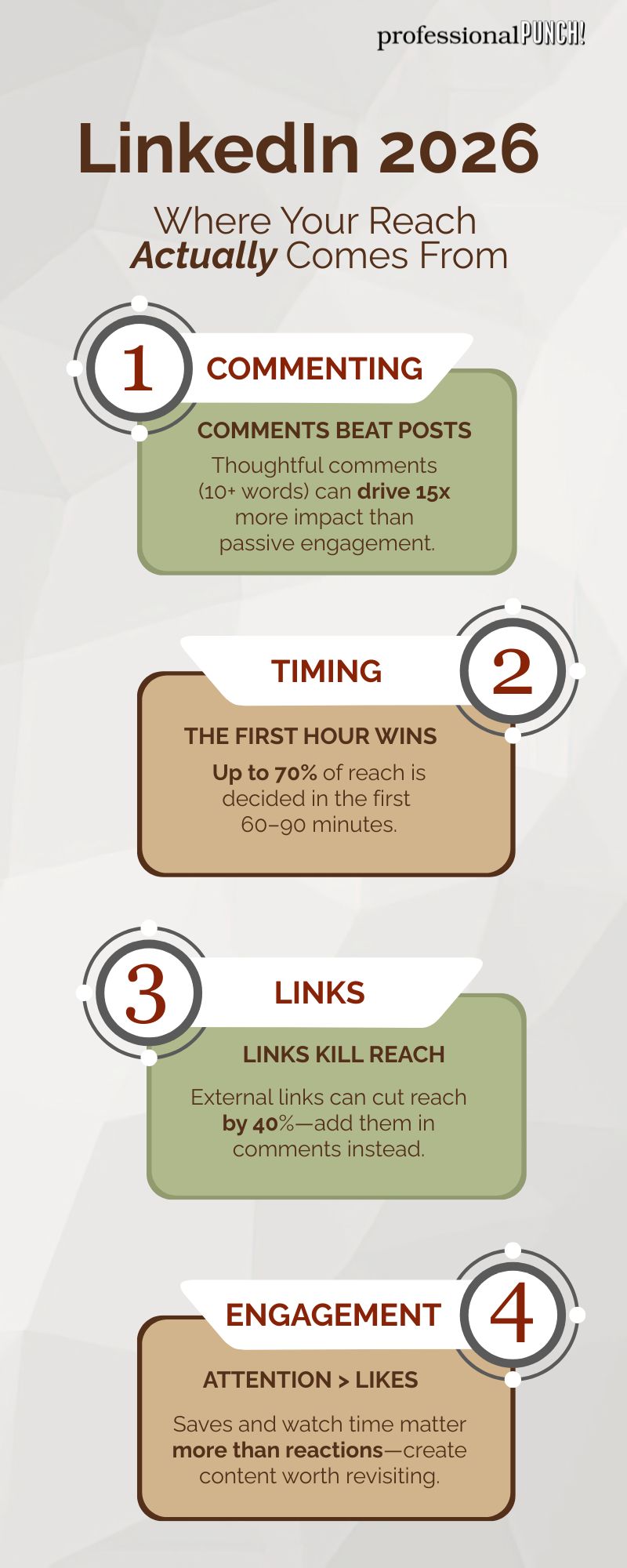
According to Trust Insights’ Q1 2026 LinkedIn Algorithm Guide, a high-quality comment can carry up to 15x the weight of a standard like.
But here’s the catch: the comment needs to be substantive.
A 10-word minimum is consistently cited as the threshold at which the algorithm registers a comment as meaningful engagement. (“Great post!” doesn’t count, though it is better than nothing).
Spending 15 minutes a day leaving thoughtful comments on posts from target clients and people your ideal clients follow can build visibility with the right audience faster and more efficiently than posting alone.
The first hour after posting is crucial
LinkedIn’s Momentum Model evaluates posts in the hours immediately after they go live. Posts that collect real engagement quickly get flagged as trending and receive broader distribution.
According to research tracking the 2026 algorithm, the first 60–90 minutes after posting determine up to 70% of your total reach.
4 practical tips:
- Post when your audience is most likely online.
- Reply to early comments quickly. Your replies count as engagement, too.
- Start a conversation by asking a question in the post itself.
- Avoid posting and disappearing; even 15 minutes of engagement right after publishing makes a difference.
External links are costing you reach
Posts with external links receive up to 40% less initial distribution. LinkedIn wants people to stay on the platform.
The workaround is simple and widely used: post your content natively, then drop the link in the first comment. People know to look there, and it doesn’t meaningfully hurt click-through.
Saves and dwell time are now measured
LinkedIn isn’t just counting reactions anymore. The algorithm tracks how long people spend reading or watching your content (dwell time) and whether they save it for later.
4 content examples that perform well under this model (and earn saves):
- Checklists
- Step-by-step breakdowns
- Case studies or “How I Solved It” narratives
- Reference material (that people want to come back to).
Content Formats Worth Prioritizing Now
Document posts (PDF carousels)
LinkedIn PDF carousels are a significant opportunity right now.
Document posts are the highest-performing format on LinkedIn right now, hitting approximately 6.6% engagement rates.
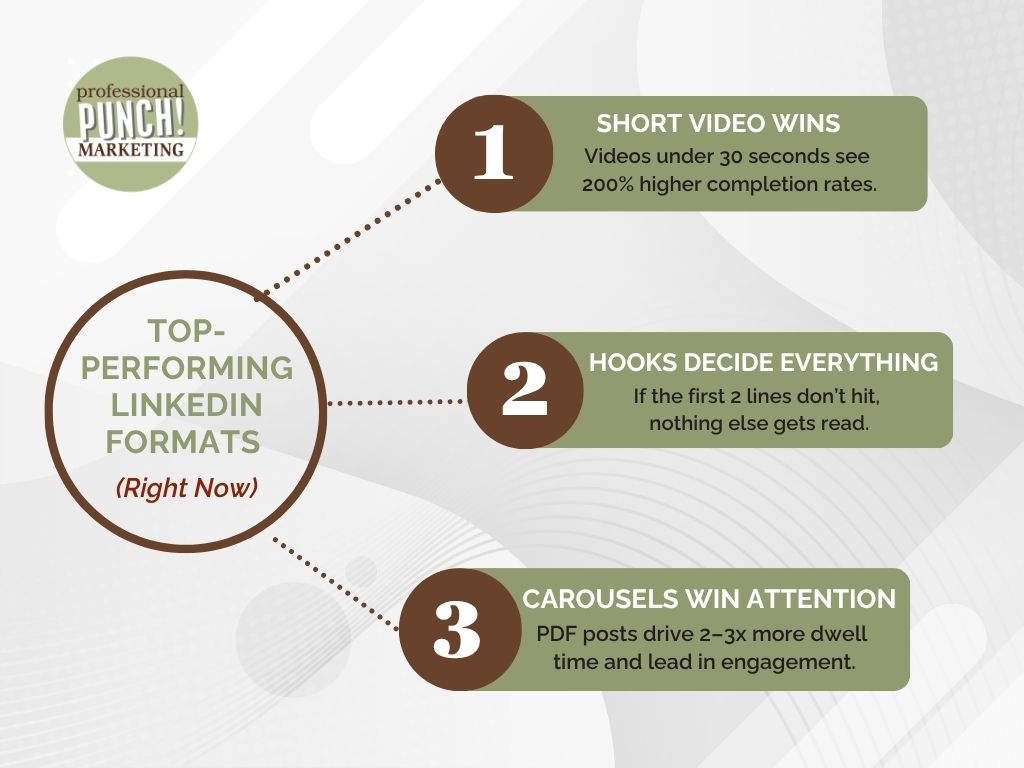
The algorithm rewards carousels as they generate 2–3x more dwell time than single images or short text posts!
Most small business owners and solopreneurs haven’t adopted this format yet, which means the space is less crowded.
Short native video
Native video uploaded directly to LinkedIn (not linked from YouTube) is a strong performer.
Short-form, vertical format works best. Videos under 30 seconds see 200% higher completion rates than longer formats.
LinkedIn Live videos receive up to 7x more reactions than standard video uploads.
Text posts
Longer text posts perform solidly, but structure matters more than it used to.
Hot Tip: The first 1–2 lines before “see more” determine whether anyone reads the rest. Your hook needs to earn the “read more” click. Nothing else matters if people don’t get past those first two lines.
A Straight Take on AI Content
The algorithm is now specifically trained to identify content that feels templated, formulaic, or AI-generated without meaningful editing.
That doesn’t mean you can’t use AI tools, but the content you publish needs to sound like you and reflect your voice, your opinion, and your specific experience.
AI as a first draft is fine. Publishing the first draft without editing it to add your perspective is likely to limit your reach.
The algorithm rewards authentic, specific, opinion-forward content. The best approach is to write like a person, not like a press release.
Three Things Worth Doing This Week
- Commit to a niche for 90 days. Pick a clear lane and stay in it. The algorithm needs time to map your expertise and build distribution within it.
- Build a daily commenting habit. Identify 10 accounts your ideal clients follow. Spend 10–15 minutes leaving real, substantive comments that add a perspective, a relevant experience, or a useful follow-up question.
- Make one document post this week. Take something you know well, like a process, a checklist, or a framework, and turn it into a 6–10 slide PDF carousel.

The Bigger Picture
These algorithm changes favor solopreneurs and personal brands. The platform is shifting to reward individual voices over corporate broadcasting, authentic content over polished PR, and genuine engagement over volume.
The founders and solopreneurs who treat LinkedIn as a relationship-building tool rather than a broadcast channel are exactly who this update benefits.
If you’re not sure where your LinkedIn presence stands, or you want help building a strategy that works with these changes, not against them, Professional Punch can help.

Reach out to learn more about our LinkedIn content and mentoring services, or book a LinkedIn profile audit to start with a clear picture of where things stand.