As a C-level executive, your schedule is already packed with meetings, decisions, and responsibilities. Adding LinkedIn to your to-do list can feel like just another task competing for your attention.
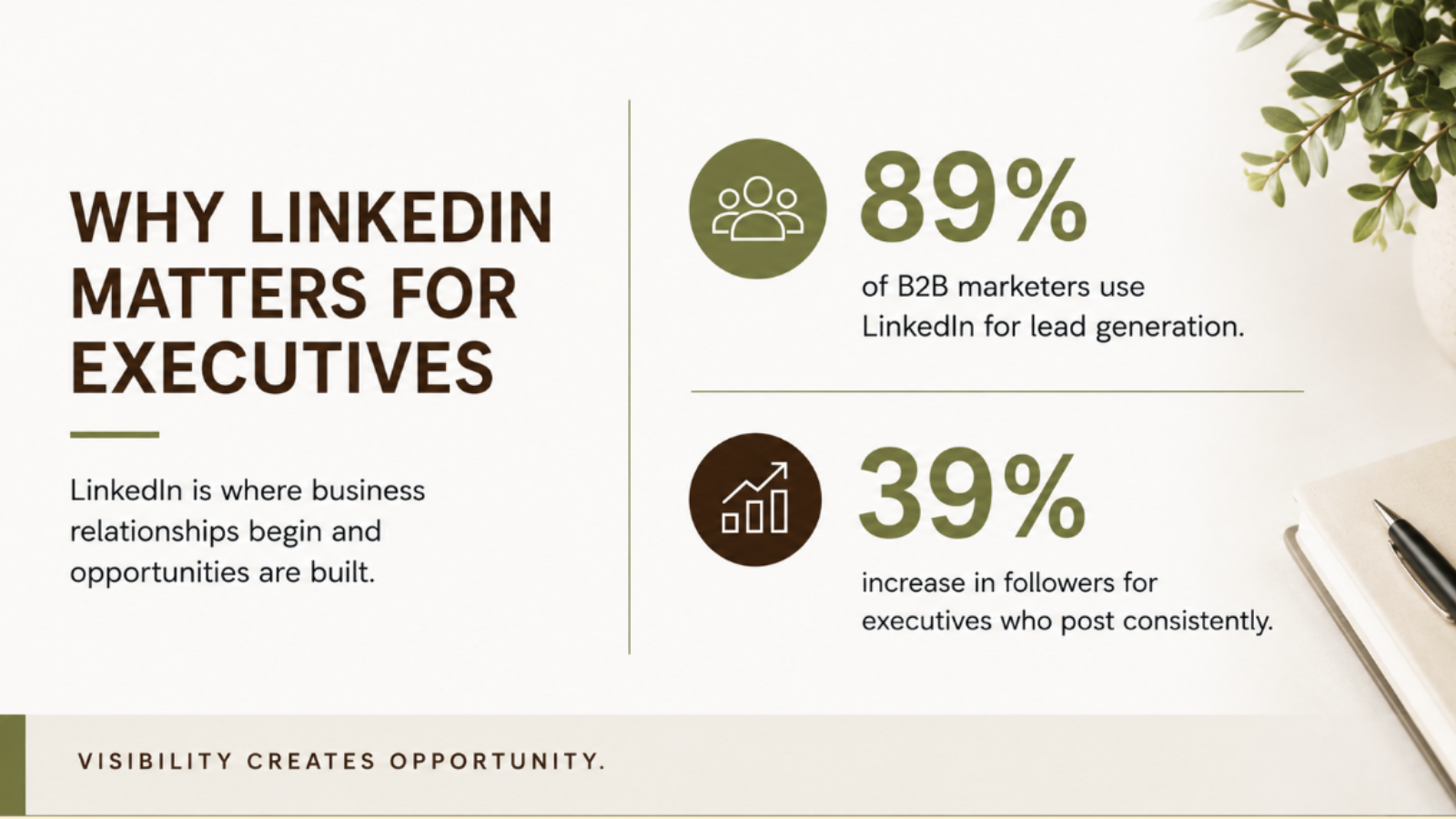
But here’s the reality: if you’re not actively building your presence on LinkedIn, you could be missing valuable business opportunities. According to LinkedIn, 89% of B2B marketers use the platform for lead generation, and executives can see up to a 39% increase in followers when they post consistently.
The importance of LinkedIn presence has never been greater for executives looking to increase visibility, establish authority, and generate business opportunities. Just like any successful business strategy, LinkedIn only delivers results when approached with consistency and intention.
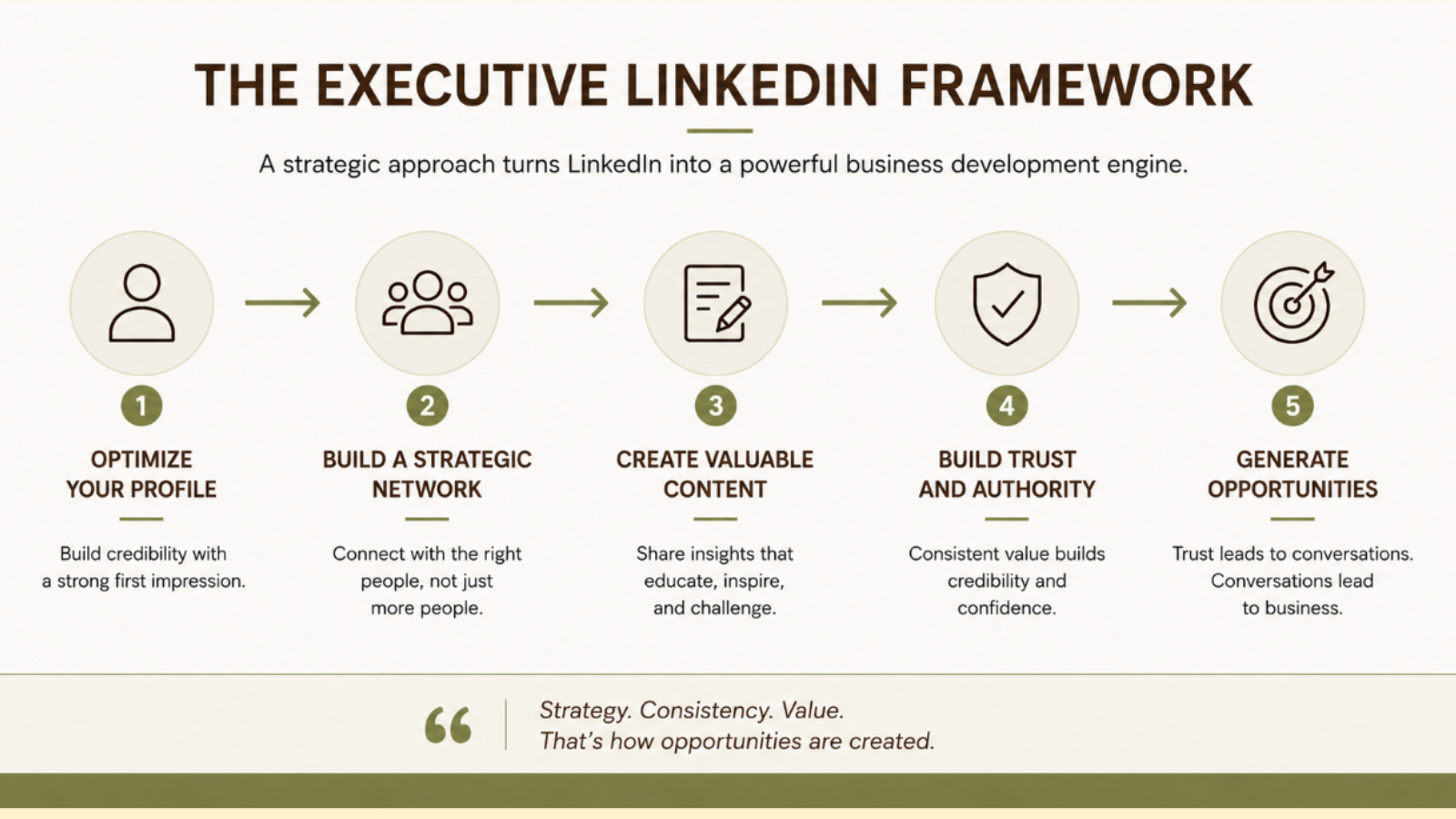
Here are a few ways to strengthen your presence, expand your reach, and generate more opportunities through the platform.
Optimize Your Profile
If you’re wondering how to build a LinkedIn presence that attracts opportunities, optimizing your profile is the first and most important step. When someone wants to learn more about you professionally, your LinkedIn profile is often the first place they look.
Your profile should immediately communicate three things:
- What you do
- Who you help
- Why you’re the right person to help them
Here are a few simple ways to make your profile work for you:
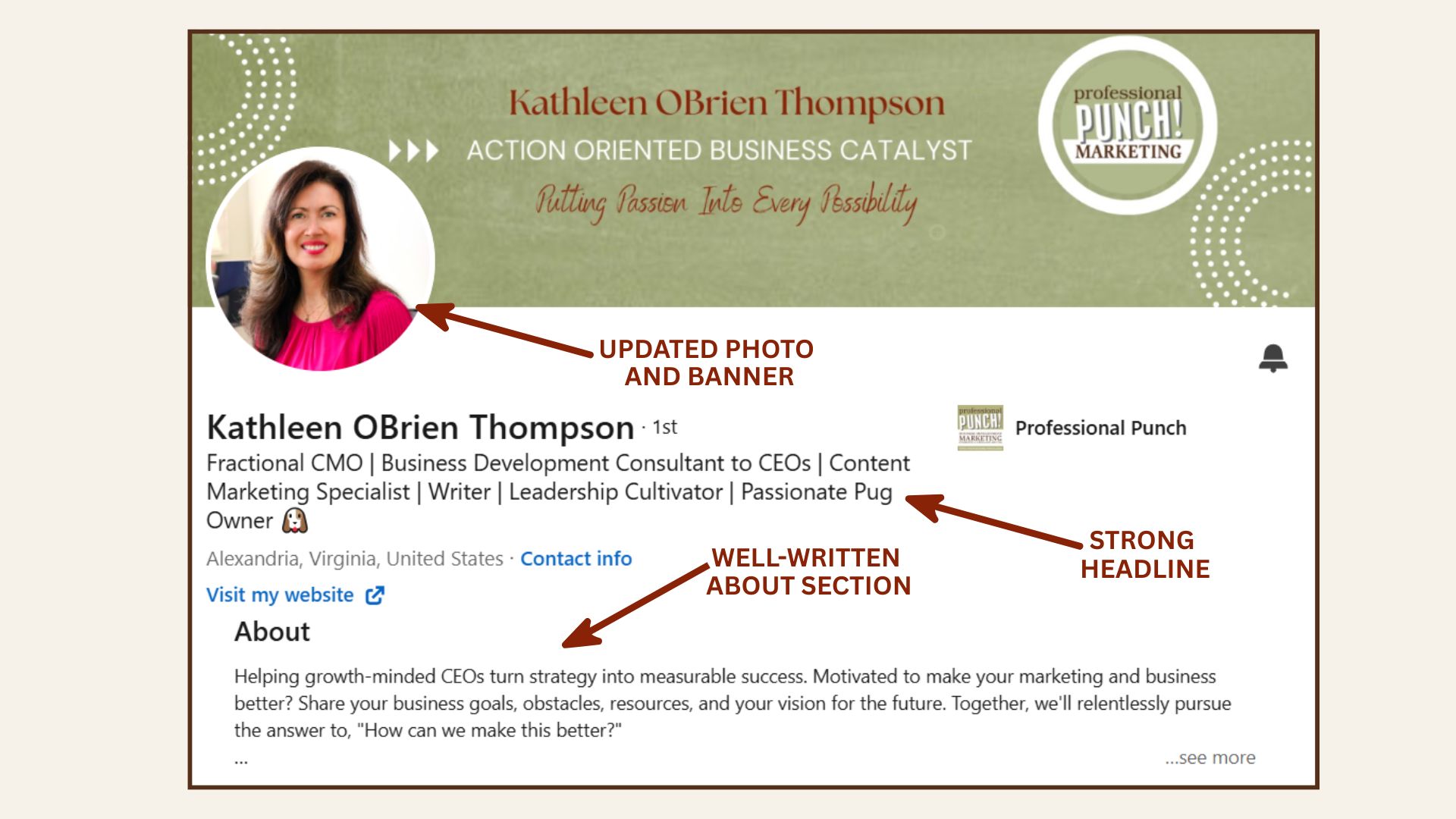
Choose a Profile Picture That Represents You Well
You don’t need a formal corporate headshot, but you should use a high-quality photo that reflects your professionalism and personality. Your profile picture is often your first impression, so make it count.
Craft a Clear LinkedIn Headline
Your headline should clearly explain what you do and the value you provide. While creativity can help you stand out, clarity should always come first. A headline that is easy to understand and searchable will attract far more opportunities than one that sounds clever but lacks substance.
For example: for a Marketing Consultant, the headline “Turning Ideas into Impact” is creative but unclear, whereas the headline “Brand Designer | Creating Memorable Visual Identities for Startups and Small Businesses” is clearer and more attractive to the reader.
Update Your Contact Information
This may seem obvious, but many professionals overlook it. Make it easy for potential clients, partners, and prospects to reach you. Include your website, company page, and any relevant links that showcase your work.
Make the Most of Your About Section
People connect with people. Let them in on why you do what you do and how your work creates impact. Use bullet points, spacing, and even a few well-placed emojis to improve readability and keep visitors engaged.
Own Your Voice by Creating Content
You are already doing great work. You just need a strategy to refine your content.
Your focus should be on creating content that educates. This is where you’ll show your expertise and present yourself as a thought leader in your area.
Here are some tips you can use to nail this:
- Share Content That Builds Trust: Great LinkedIn content helps your audience understand your expertise, perspective, and values. Sharing practical insights, real-world lessons, useful frameworks, and stories makes your work more relatable. The goal is not just to post more, but to give people a reason to trust you, remember you, and see you as a credible voice in your space.
- Identify your content Pillars: Identify the three or four core topics that best represent your expertise and align with your business goals. These pillars give your LinkedIn content focus and help reinforce what you want to be known for.
- For example: If you’re a financial advisor, your content pillars might be retirement planning, tax strategies, investment management, and wealth preservation. If you’re a marketing consultant, they could be SEO, content marketing, lead generation, and AI in marketing.
- In weeks 3-5 of our LinkedIn mentoring program, we help clients define these pillars, identify the most effective angles for each topic, and tailor content to speak to the right audience.
- Choose a sustainable rhythm: When it comes to content, consistency beats volume. If you start by posting times a week and then stop posting for 1 month, your growth will be very limited. Choose a cadence you can sustain while maintaining the quality.
- Use Hard Data: Using case studies with specific results is often a good way to show your expertise or to challenge industry myths. Data-driven content helps your audience see how you think, what you pay attention to, and the impact your leadership can create. It also gives prospects, partners, and industry peers a stronger reason to trust your perspective and work with you.
Good content should do the following things:
- Educate and inspire on a few key topics
- Share practical insights, challenge industry myths, and tell stories
- Be consistent
- Have real-world examples
If you’re struggling to come up with content ideas, check out our blog on LinkedIn post ideas for inspiration.
Understand the LinkedIn Algorithm
With the arrival of AI, LinkedIn has become better at understanding what your content is really about. While your main focus should always be creating posts that are useful, relevant, and valuable to your audience, it helps to understand how the algorithm works. Here are a few ways to work with LinkedIn’s algorithm:
- Stay close to your core topics. Consistent themes help LinkedIn understand what you want to be known for.
- Lead with clarity. Make the topic and value of the post clear in the first few lines.
- Prioritize depth over broad commentary. Specific insights are more useful than generic takes.
- Encourage real conversation. Thoughtful comments and discussion help extend your reach.
- Engage in your area of expertise. Commenting on relevant industry posts can increase visibility with the right audience.
Build a Network That Reflects Your Goals
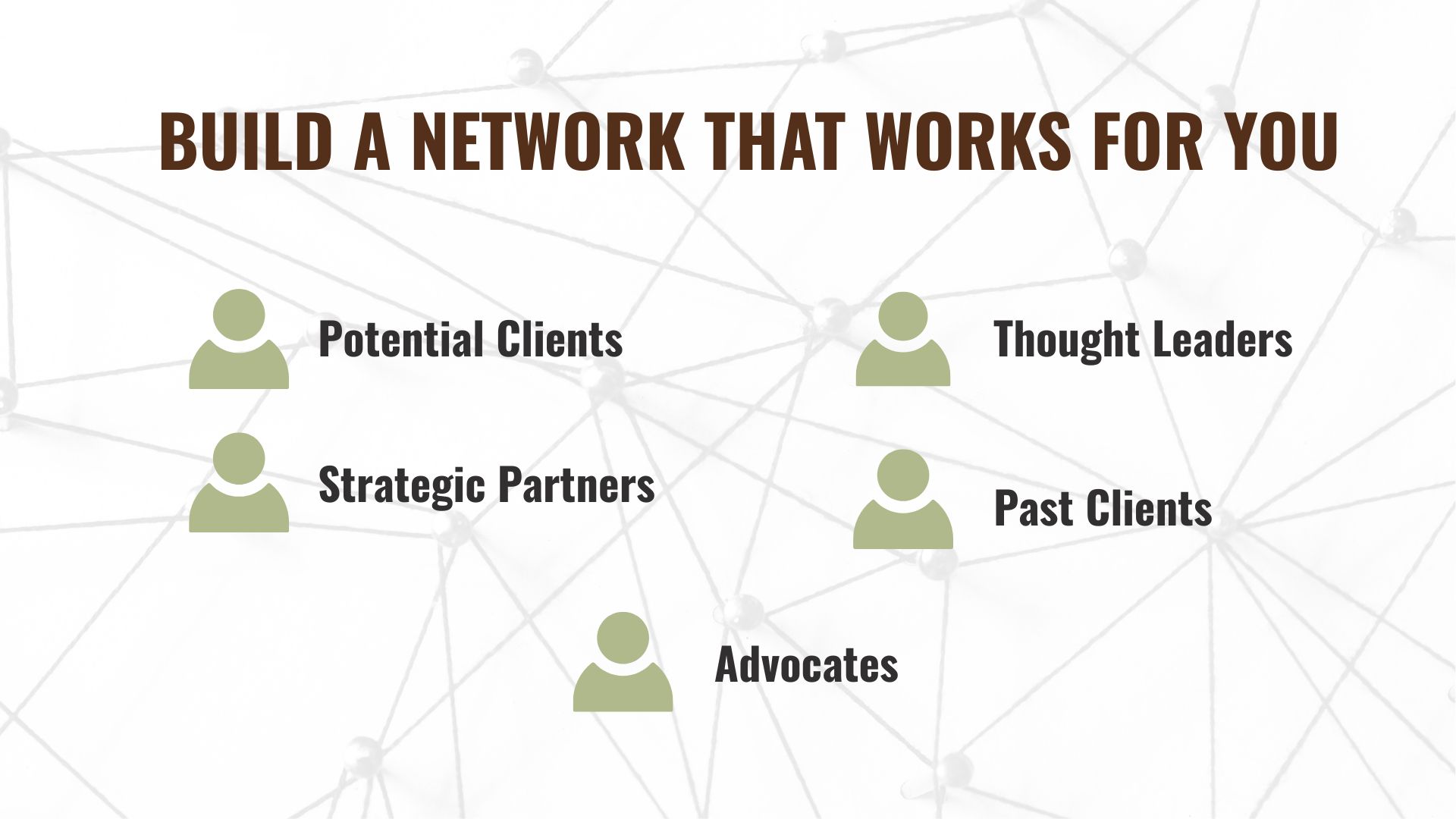
Grow a network of relevant connections rather than chasing big numbers. The right contacts amplify your presence:
- Target Key Contacts: Actively connect with decision-makers and thought leaders in your industry. Prospective clients, strategic partners, and peers in complementary fields are top priority. Don’t be afraid to send a personalized connection request explaining why you’d like to connect (for example, referencing a shared interest or a recent conversation they posted).
- Leverage Existing Ties: Reconnect with past colleagues, clients, and alumni. These contacts already know your work and may welcome referrals or collaborations.
- Use LinkedIn Features: Browse the “People You May Know” and “My Network” suggestions to find mutual connections. Pay attention to profiles that appear in your feed. If someone posts useful industry content regularly, they might be a valuable connection.
- Quality Over Quantity: A smaller network filled with the right people yields more opportunity than a large, unfocused one.
We know curating your list of contacts can be both time-consuming and boring, so that’s why we created our 12-week LinkedIn Mentoring Program to take the stress and the guesswork out of the process.
Engage With Purpose
Daily interactions on LinkedIn can dramatically boost your profile. Make engagement purposeful:
- Leave Thoughtful Comments: Rather than just liking posts, leave substantial comments on others’ posts. LinkedIn’s algorithm rewards depth: insightful comments can get 2–5× more reach than simple reactions. These comments also position you in front of new people (for example, others in the poster’s network).
- Celebrate Peers: Congratulate connections on promotions or share their content when relevant. This builds goodwill and often leads to reciprocation.
- Prompt Conversations: If someone comments on your post, reply to them by name and keep the dialogue going. Early responses (within the first hour) help the platform see it as a meaningful conversation.
- Be Consistent: Even small actions matter. Aim for a few quality interactions each day.
- Choose Authenticity Over “Noise”: Avoid generic phrases like “Great post!” when commenting. Instead, add a new perspective or follow-up question. The algorithm prefers genuine discussion in context.
Monitor Analytics and Refine
Use LinkedIn’s analytics (or external tools) to see what works and to adjust your strategy:
- Impressions and Reach: Track how many people see your posts. A steady rise in impressions means growing visibility.
- Engagement Rate: Look at the percentage of people who interact with a post (likes, comments, shares) relative to its reach. High engagement rate indicates resonant content.
- Profile Views: A spike in profile visits after a post is a strong signal that your content attracted interest. Check who’s viewing you. Are they your target audience?
- Connection Requests & Messages: New inbound connection requests or direct messages following a post are immediate leads. When the right people start reaching out, your content is doing its job.
- Follower Growth: Track new followers over time. Align spikes to the posts that earned them. This “impression-to-follower” conversion insight helps you see which topics attract the right crowd.
Go Mobile
Don’t let a busy schedule keep you offline. Download the LinkedIn mobile app so you can engage in spare moments: The LinkedIn mobile app makes it easier to engage in small moments between meetings, during travel, or over coffee. A quick comment, connection response, thank-you note, or post interaction can help keep your presence active without requiring a large block of time.
Staying top-of-mind is easier when LinkedIn is just a tap away. By seizing micro-moments, you ensure your audience regularly sees your name and content.
(Source: Unsplash. Free to use under the Unsplash License)
Our 12-Week LinkedIn Mentoring Program
LinkedIn visibility is easier when there is a clear plan behind it. Our 12-week mentoring program helps executives define their voice, focus their content, and show up consistently without the guesswork.
Through guided sessions, you will be able to:
- Clarify Your Brand & Goals: Define a personal brand that highlights your expertise and attracts the right opportunities.
- Optimize Your Profile: Transform your headline, About section, Featured posts, and other elements into strategic assets.
- Lock in Your Content Pillars: Identify the core topics that showcase your expertise and align with business goals.
- Develop Thought Leadership: Learn to craft posts that educate, inspire, and challenge, establishing you as an industry authority.
- Gain a Content Framework: Use a proven process to regularly turn your experience into engaging posts and articles.
- Engage with Purpose: Build a network of high-value connections, start authentic conversations, and grow relationships that lead to referrals and business.
- Track and Adapt: Use analytics to see what’s working and refine your strategy for even better results.
By the end of the program, you’ll have a sustainable LinkedIn strategy, a more polished profile, and the confidence to publish regularly.
Implementing these best practices will make LinkedIn a powerful part of your leadership toolkit, opening doors to new opportunities and strengthening your professional reputation.

Ready to build a LinkedIn presence that supports your business goals? Contact us directly at info@professionalpunch.com to schedule a consultation.