You’re staring at the blank LinkedIn post box. Again. The cursor blinks at you, pressuring you to write something profound, but your brain blanks. Sound familiar? If so, you’re not alone.
“I don’t know what to write” is one of the most common challenges we hear from clients. Smart, accomplished leaders who know they should be posting on LinkedIn but freeze when it’s time to actually do it.
You have more to say than you think. You just need some prompting, a little guidance, and a system for capturing it.
In this article, we share actionable LinkedIn post ideas, real-world examples, and best practices we’ve developed over years of mentoring business owners, C-suite executives, and company leaders through this exact challenge.
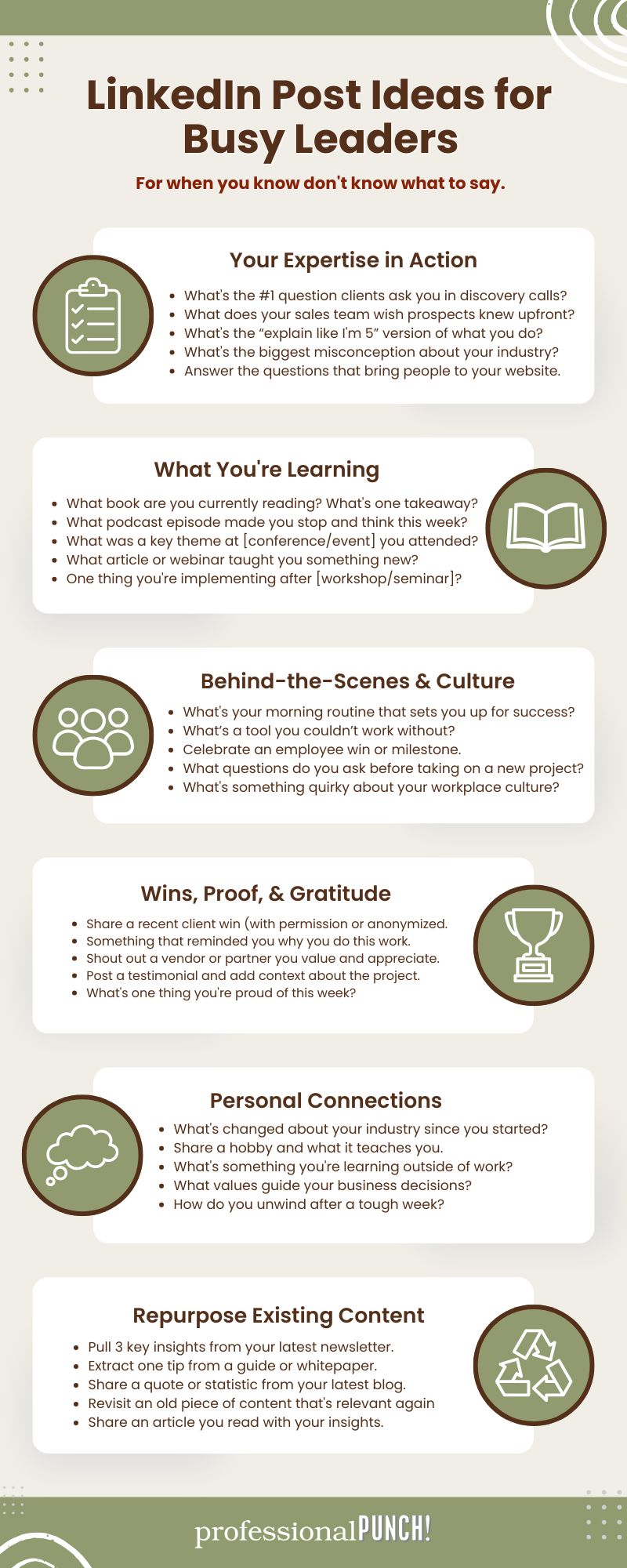
Just want a list of post ideas without the insight and examples? Scroll to the bottom for a downloadable list and get posting!

Why Consistent Posting Pays Off
LinkedIn’s algorithm rewards consistency. When you post regularly, each piece of content performs better. Your visibility compounds, people start recognizing your name, and conversations begin.
It’s not just visibility you gain from posting consistently:
Posts from C-level executives get four times more engagement than content from other LinkedIn users. And after posting, executives can expect a 39% surge in followers.
The challenge is showing up consistently when you’re already stretched thin and don’t feel like you have something groundbreaking to share. Let’s address the elephant in the room: There’s a lot of pressure around being a “thought leader” and creating “Thought Leadership” content.
You can let that go. Not every post needs to be thought leadership.
Save those posts for when you genuinely have something important to say, when you’re excited to share your take on what’s happening in your industry. Most of your posts can be simple and still deliver value to your audience. Here are some ideas to get you started.

Your Expertise in Action
You answer questions every single day. You solve problems. You explain concepts. That’s content waiting to happen.
FAQs You Answer All the Time
Think about the questions you get asked repeatedly. In client calls, team meetings, industry events, and everywhere else. These are gold.
Why it works: If one person asks, hundreds of others are likely wondering the same thing. By answering these questions in LinkedIn posts, you’re filling a knowledge gap.
Where to find FAQs to post about:
- Review notes from recent customer/client calls
- Ask your sales team what prospects ask most often
- Check your customer service team’s FAQ list
- Look at website form submissions
- Consult “People Also Ask” on Google search results for topics in your industry
- Explore Answer the Public to see what questions people are searching for
Myth-Busting
What misconceptions do you constantly correct? How do you see your industry inaccurately portrayed?
Why it works: Correcting false beliefs positions you as the trusted expert and can help your audience avoid costly mistakes.
Try this: “Myth: [false belief]. Reality: [truth]. Here’s why this matters…”
Another alternative in the same spirit is: What do you wish your customers knew about your industry or your specific role?
Complex Topics Made Simple
Take something technical or jargon-heavy in your field and break it down. The “explain it like I’m five” approach.
Why it works: Accessibility builds trust. It also demonstrates true mastery. If you can make something complex feel simple, people know you really understand it.

Post About What You’re Learning
You don’t need to be the source of all knowledge. You can be the connector, the curator, the person who shares what’s worth paying attention to.
Recent Discoveries
What webinar did you just attend? What article made you think differently? Which podcast episode is stuck in your head? What book are you reading (or just finished)?
Why it works: It shows you’re constantly evolving and positions you as someone engaged with your field, not stuck in old ways of thinking.
Try this: “Just finished reading [book]. The biggest takeaway? [insight and why it matters]…”
Industry Events
Think about conferences, workshops, local business events, and networking gatherings. What did you learn? What surprised you? What themes kept coming up? What did you enjoy?
Why it works: It’s timely, relevant, and shows you’re actively engaged in your industry and community.
Behind-the-Scenes & Culture
People connect with people, not companies. Giving them a window into how you work makes you more relatable and memorable.
Day-in-the-Life Content
What does your workday look like? What are your daily rituals? Do you have any productivity hacks? What’s a tool you use every day that you couldn’t work without?
Why it works: It humanizes leadership and makes you more approachable. People love seeing how successful people actually spend their time.
Try this: “My morning routine that sets me up for focused work: [brief breakdown]…”
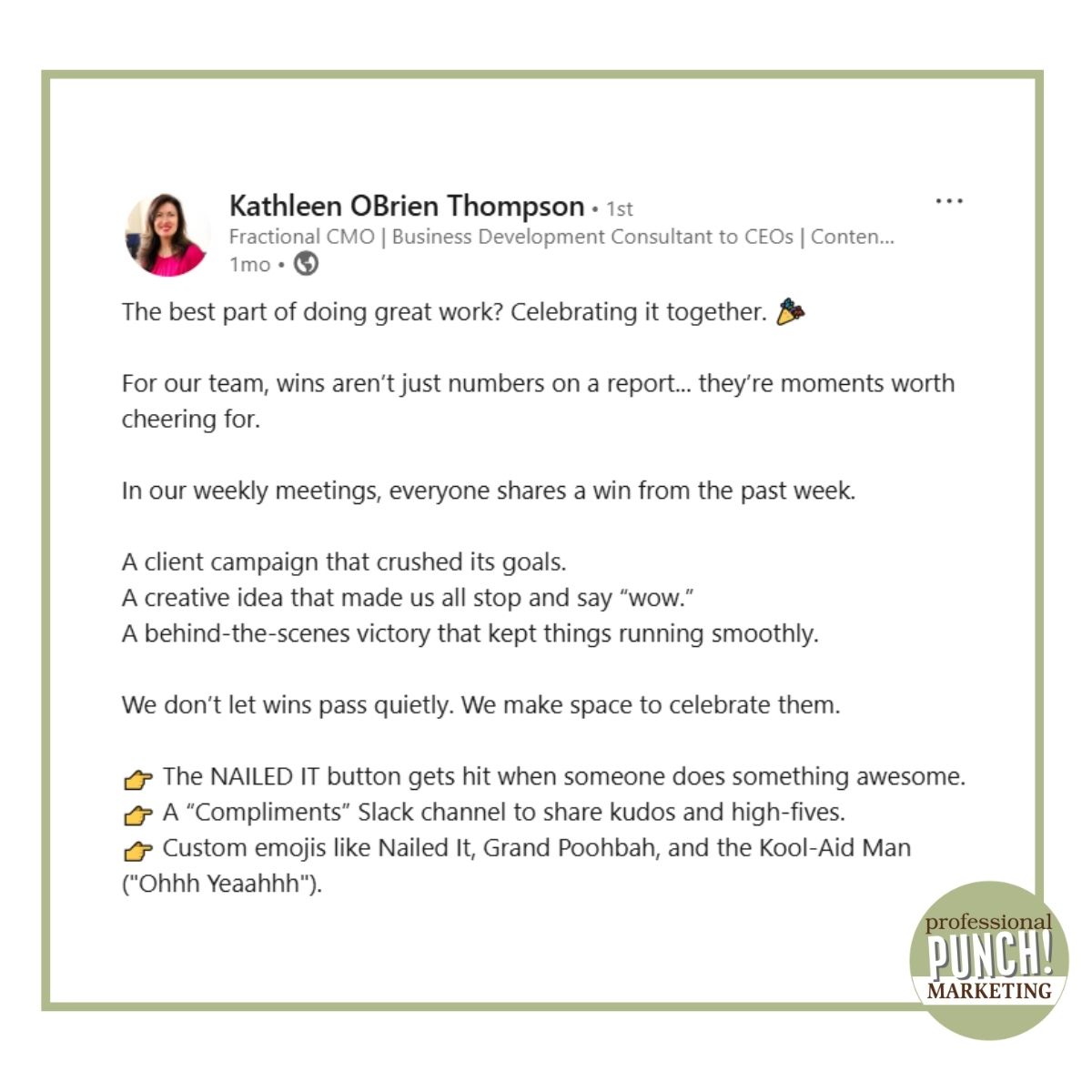
Team Spotlights or Workplace Culture
- Employee achievements
- Company values in action
- How your team interacts and works together
- Lighthearted moments that show your team’s personality
Why it works: It builds your brand personality, attracts talent, and shows what it’s like to work with you.
These types of posts work best with pictures of your office or your team (they don’t have to be high production) to really humanize and showcase the people behind the work.
Process Reveals
How do you approach problem-solving? What’s your decision-making framework? What does your process look like when a client brings you a challenge?
Why it works: It gives followers an insider view of expertise in action without giving away the farm.
Try this: “Recently, a client came to us with [problem or challenge]. [Explain how you approached the problem]. The result? [What did you achieve?
Wins, Proof, & Gratitude
Social proof doesn’t have to feel salesy. When done humbly and with authenticity, it builds credibility and celebrates the people you work with.
Client Success Stories
- Share case studies (with permission)
- Before-and-after scenarios
- The journey from problem to solution
Why it works: It’s social proof wrapped in storytelling. People see themselves in your clients’ challenges.
Try this: “Last quarter, we helped [client/anonymized description] achieve [specific result]. Here’s the approach we took…”
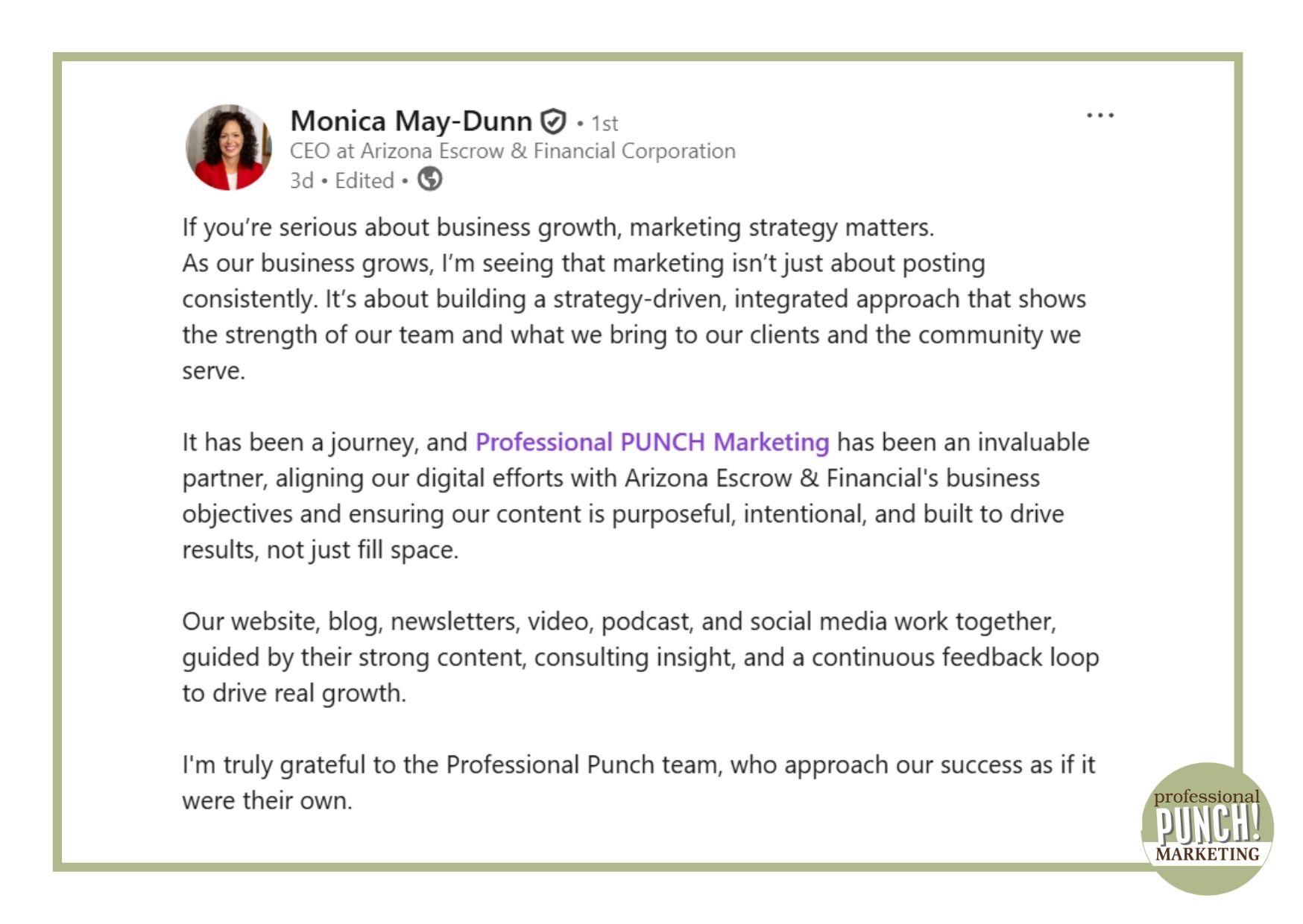
Customer Reviews or Testimonials
When someone says something kind about your work, share it (with permission) and add your own context or gratitude.
Why it works: It builds credibility without you having to sell yourself. Plus, people who praised you will likely engage with and share the post.
Partner/Collaborator Spotlights
Vendors, strategic partners, collaborators you genuinely value. Give them some shine.
Why it works: Generosity is magnetic. It expands your network reach and shows you value relationships over transactions.
Try this: “Shoutout to [partner] for [specific contribution]. If you need [their service], they’re the best in the business because…”
Personal Connections
You’re more than your job title. The most memorable leaders are the ones who let people see their full humanity.
Your Career Journey
- Pivotal moments
- Lessons learned the hard way
- Early mistakes that taught you something valuable.
Why it works: Vulnerability builds connection. People trust leaders who’ve been in the trenches and come out wiser.
Personal Interests with a Work Angle
You can occasionally post about your hobbies, your pets, or what you did this weekend. Bonus points if you can tie it back to a professional insight, but it’s not required. Why it works: It makes you memorable and multidimensional. People do business with people they like. Try this: “Training for a marathon taught me so much about perseverance and determination…” or simply “Spent the weekend [activity]. Sometimes the best thing you can do for your work is step away from it for a moment.”
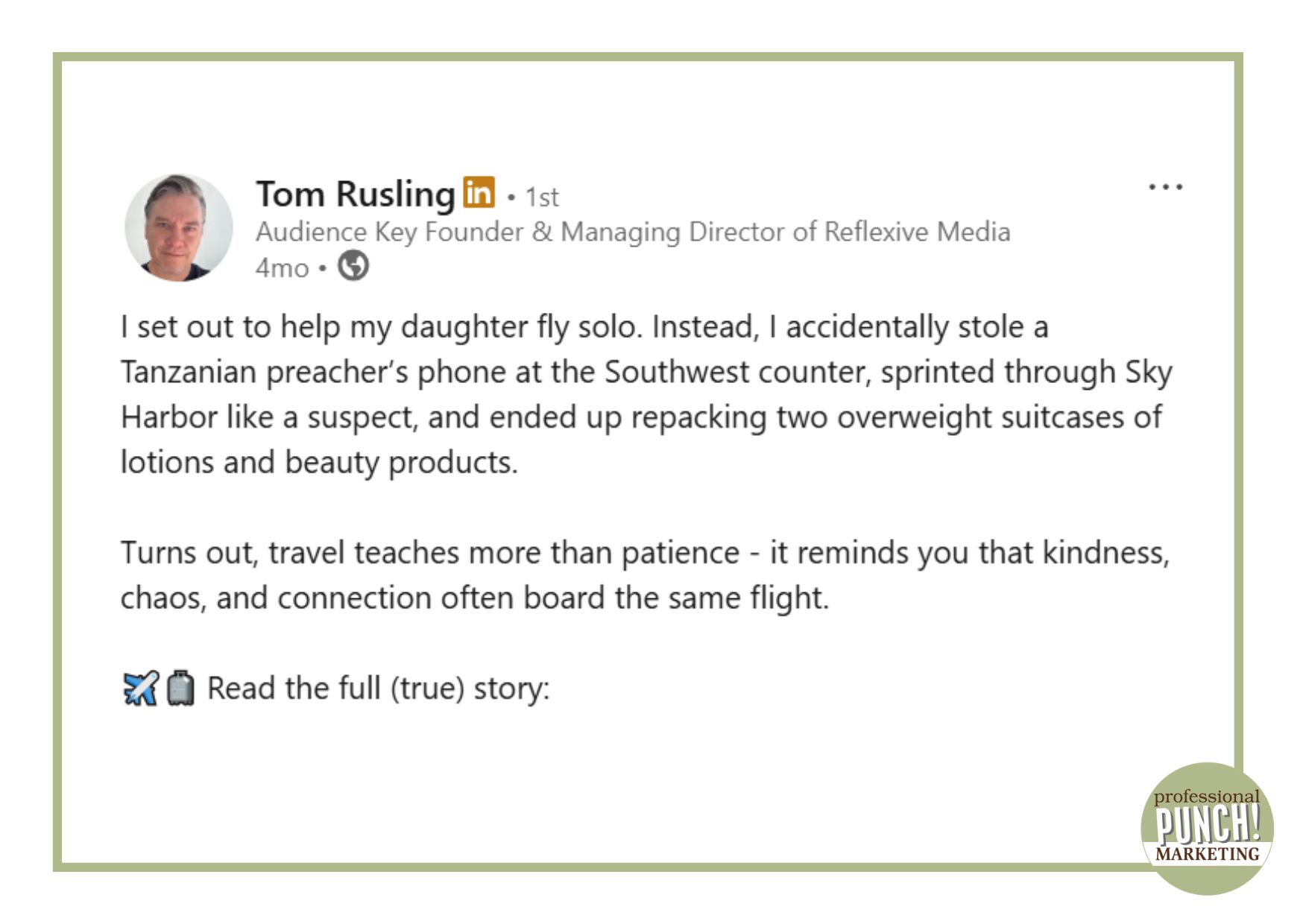
Sources of Inspiration
What keeps you motivated? Who are your role models? What matters to you beyond the bottom line? Why it works: Values-driven content attracts connections who share those values.
Repurpose What You’ve Already Created
You don’t have to start from scratch every time. You’ve already created content like blogs, videos, newsletters, guides, and presentations. Use it!
Mine Your Existing Content
Pull key insights from old blog posts. Share transcript snippets from videos. Highlight the best sections of past newsletters. Extract one actionable tip from a downloadable guide. Why it works: Most of your current network hasn’t seen it. And even if they have, repetition reinforces learning. You’re not being redundant; you’re being helpful. Try this: “From our latest [content type], here’s the one thing worth remembering…”

You Have More to Say Than You Think
The blank page feels intimidating because we put a lot of pressure on ourselves.
Not every post needs to change the world, go viral, or establish you as a thought leader. Sometimes a post can just be helpful, human, relatable, or true.
This article gives you the prompts and ideas to get started, but if you want help building a sustainable LinkedIn strategy, we can help with that. We’ll work with you to create an approach that fits your schedule, reflects your voice, and actually drives results for your business.
Learn more here or reach out at info@professionalpunch.com.
Click the list below to download and save for later!