Let’s face it, search has changed.
The Challenge: Many marketers are finding their once high-ranking content buried beneath AI search engine summaries.
What’s At Stake: Your visibility, traffic, and ultimately, your business growth.AI has become the gatekeeper to your audience and that top spot is no longer a ranking, it’s a curated recommendation.
SEO isn’t just about climbing the SERP ladder anymore, your new goal is to be featured in prominent AI-generated answers.
How do you ensure your content is part of what AI-powered search chooses to show?
Let’s break it down.
From Search to Spotlight: The New Reality of AI-Powered Search
Now, AI-powered search engines act like an editor-in-chief, using machine learning and large language models (LLMs) to scan millions of pages and generate featured summaries of what they deem most valuable, right at the top of the results page.
What does it look like now?
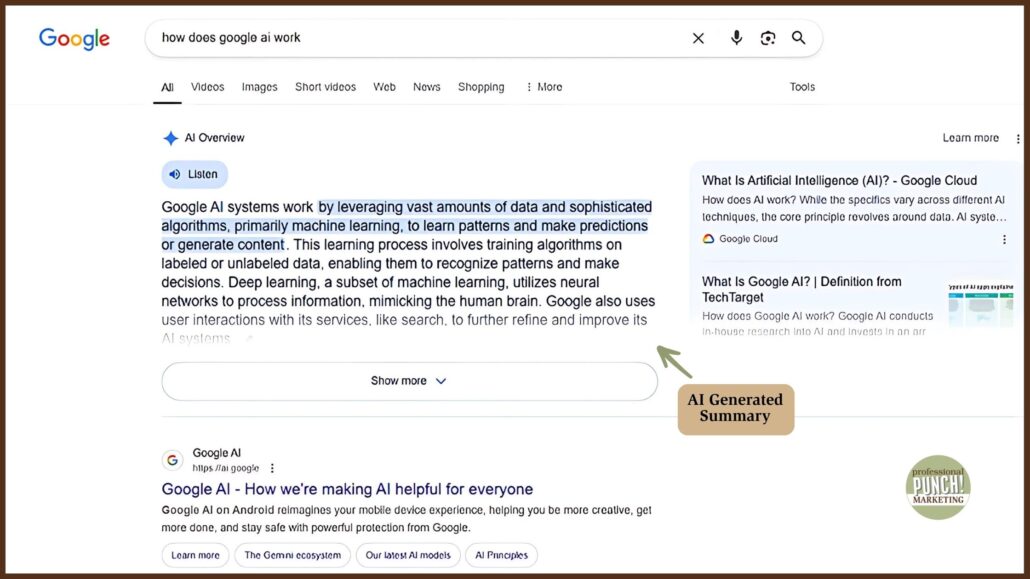
Why Do AI Search Results Look So Different?
- It pulls from multiple sources, not just top-ranking pages
- It predicts follow-up questions you might have
- It links to supporting information beyond your original query
- It expands your search terms behind the scenes
Bottom Line: Your content can rank high but remain invisible in AI summaries. Or, appear prominently despite not ranking in traditional top positions.
If an AI-Powered Search Engine Gives the Answer, Why Would Anyone Click?
“Now, instead of you going after a featured snippet on your own, Google itself is replacing that with their own answers to a search by pulling from multiple different sources who have already written on the topic, and it’s majorly affecting CTR,” explains Grace Wilkins, Founder & Lead SEO Strategist at The Organic Collective.
- Branded searches actually see improved CTR
- Transaction-focused searches still drive clicks
- Complex topics continue to bring visitors seeking depth
Bottom Line: Being featured in AI summaries establishes your content as authoritative, and for the right topics, still drives valuable traffic.
Already Doing SEO? You’re Halfway to GEO
The idea is simple: instead of just optimizing for rankings, you’re also optimizing for AI-generated summaries that produce helpful snippets from your content.
The good news? If you’ve invested in quality SEO, you’re ahead of the game.
What SEO Tactics Work for AI Generated Snippets:
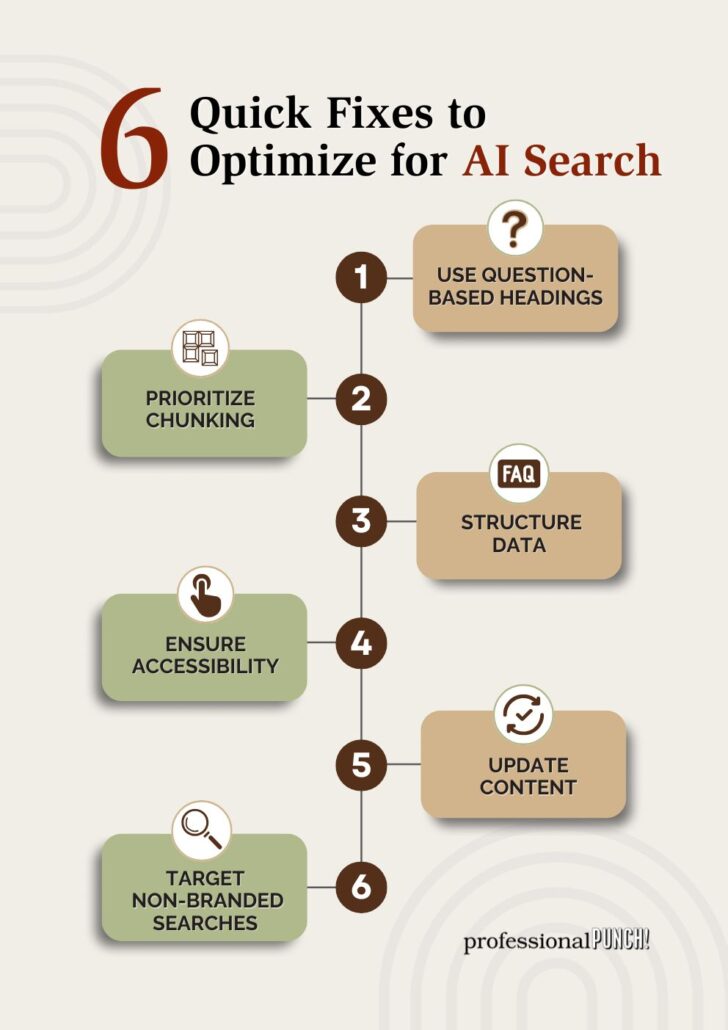
- High-quality, genuinely helpful content
- Clear structure with descriptive headings and internal linking to establish content relationships
- Natural language that matches how people actually search
- Regular content updates
- Technical elements like schema markup and site speed
Bottom Line: Authenticity wins. The more your content is genuinely useful, clearly structured, and aligned with real questions, the more likely it is to show up in AI summaries.
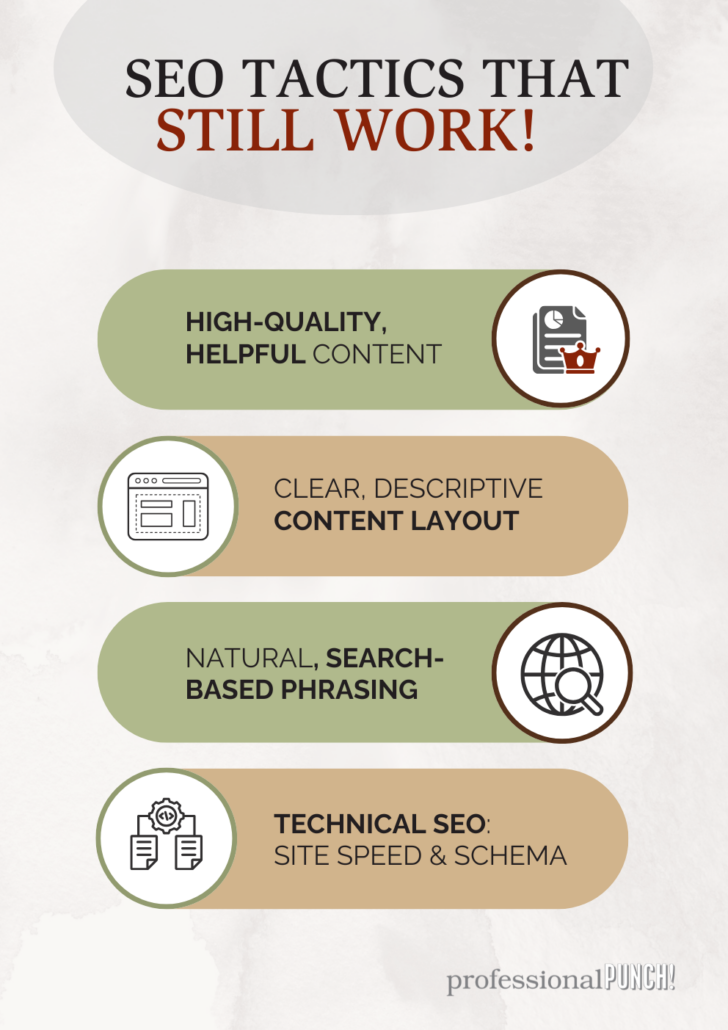
6 Changes You Can Make Today to Optimize for AI-Powered Search
- Use question-based headings (ex: “Why do plants need sunlight?”).
- Write like you’re having a conversation and think about how real people search.
- Before: “Tomato Growing Methods”
- After: “How Do You Grow Tomatoes Indoors?”
- Go beyond broad questions and target high-intent searches that signal someone is ready to take action.
- Use phrases like “best project management software for remote teams” or “CRM for startups under $50/month” to attract motivated searchers AI can’t fully satisfy.
- AI loves clarity and scannability. Break up content into clear, short paragraphs.
- Start with a strong topic sentence that explains what each section is about, just like we’ve done in this article!
- Use FAQ, How-To, and other relevant schema markup.
- This helps AI pull relevant information quickly.

- Ensure images have alt text and videos have transcripts.
- Make sure your site is fully crawlable and accessible to AI bots.
- Before: <img src=”seo-chart.jpg”>
- After: <img src=”seo-chart.jpg” alt=”Graph showing 43% CTR increase after implementing AI optimization strategies”>
- Regularly search your target keywords to see what’s appearing in AI overviews.
- Regularly refresh content to stay relevant.
- Example: If AI generated summaries keep mentioning a new tool, update your content to include it and stay competitive.
6. Non-Branded Searches with Real Buying Intent
Wilkins notes that “Google Generative AI is gobbling up informational searches”, but searches with buying intent still present great opportunities for brands. Her advice includes:
- Target MOFU (middle of the funnel) and BOFU (bottom of the funnel) queries.
- “Think depth over breadth” — optimize key product and service pages, not the entire site.
- This means improving on-page SEO.
The bottom line is that good SEO still works for GEO.
Future-Proofing Your Content Strategy
AI search isn’t stopping, it’s accelerating, but the path forward is clear.
Focus on content that’s useful, trustworthy, and created with real people in mind. The more human your content feels, the more resilient it becomes, no matter how the algorithms shift.
Need help adapting your strategy? Reach out to Professional Punch! We’re here to guide you through the next wave of search.